Winter always changes houses. You hear things you didn’t hear before. Pipes tick. Floors creak. Faucets take longer to wake up. And plumbing starts telling on itself. Most winter plumbing trouble doesn’t show up as a flood. Not at first. It starts quietly. Somewhere you’re not looking.
The pipes you never think about
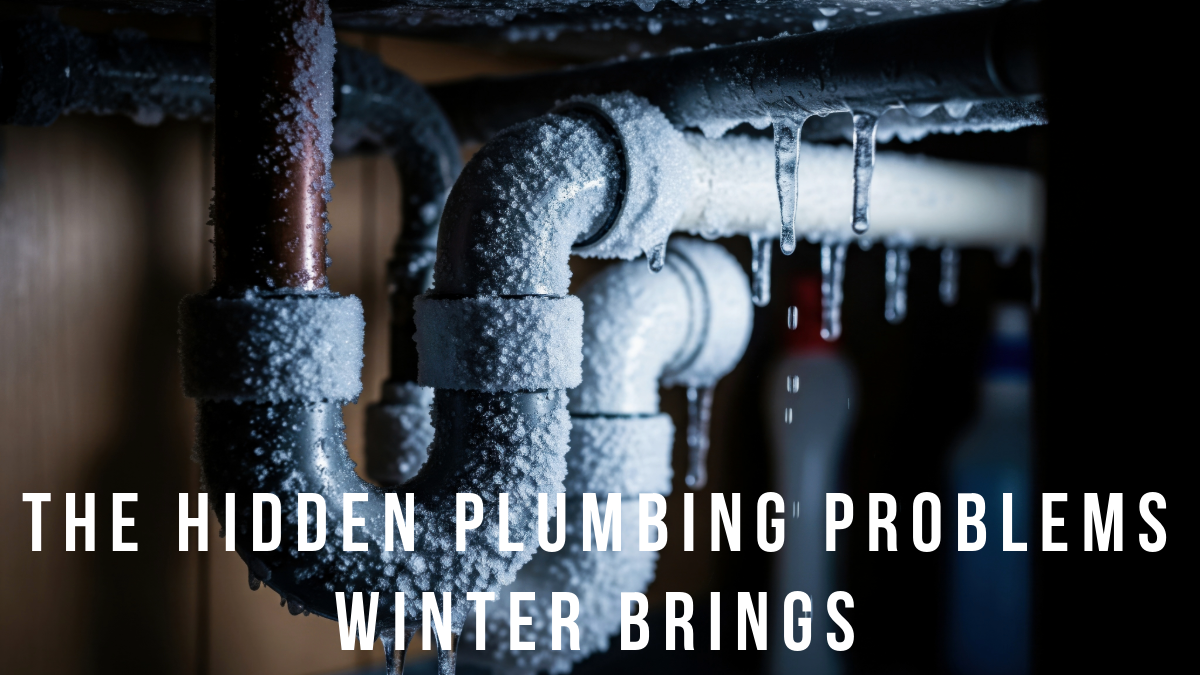
The ones behind the walls. Under the floor. In the back corners of the basement. Cold tightens them. It makes them stiff. Old joints don’t love that. Neither do sections that were already under stress. Sometimes a pipe freezes and nothing happens. You turn on the tap and get nothing. Then it thaws and still nothing happens. Then later, when nobody’s home, water finds the crack and starts working. A damp smell. A soft spot. A stain that wasn’t there last week. That’s often how it shows up.
Drains that start acting off
Winter messes with drains in ways people don’t connect to temperature. Grease thickens. Soap hardens. Hair and food grab onto it and stop letting go. What used to slide through suddenly hangs around. At first it’s slow. Then it’s noisy. Then the sink fills when the washer runs. Basement drains start talking. Toilets bubble. Tubs don’t empty like they used to. That’s not a coincidence. That’s winter changing what’s happening inside the line.
Little changes in fixtures
A handle that feels tighter. A toilet that takes longer to fill. A shower that coughs before it flows. Cold messes with seals. Rubber stiffens. Metal shifts. Valves stop moving the way they did in July. Most of these changes don’t leak right away. They sweat. They mist. They weep into cabinets and wall space where nobody looks until the smell shows up. By then, the water’s been there a while.
Water heaters that sound different
Winter is a heavy season for water heaters. More hot water. Colder incoming supply. Longer heating cycles. Sediment inside the tank settles and bakes. You start hearing popping. Tapping. A dull knocking sound. Sometimes people notice rusty colors. Sometimes the floor stays damp around the base. Sometimes showers just don’t last. Those are early signs. Not random ones.
Outdoor lines everyone forgets
The hose got put away. The yard went quiet. So the outside plumbing disappears from thought. But any water left in those lines sits there waiting. Exterior pipes freeze fast. When they crack, they often do it behind walls where they connect to the house. No puddle. No warning. Just a split waiting for pressure. A lot of spring floods started as winter cracks no one knew existed.
Small leaks that don’t stay small
Winter pressure is different. Temperature swings are sharper. Materials move more. That’s when old fittings start letting go. A drip under a sink. A dark corner in a cabinet. A faint musty smell near a wall. Those aren’t annoyances. They’re starts. Wood drinks water. Drywall spreads it. Insulation holds it. And the problem grows even when the surface looks the same.
Sounds you weren’t hearing before
Pipes knocking when water shuts off. A whistle in the wall. A groan when hot water starts. Those sounds are movement. Pressure. Restriction. They’re pipes reacting to winter. They don’t show up for no reason. Winter doesn’t invent plumbing problems. It exposes the ones that were already there, waiting for stress to bring them out.
Contact JV Mechanical Contractors, Inc.
For property owners seeking top-tier HVAC solutions, JV Mechanical Contractors, Inc. is a trusted partner. With years of experience in providing heating and cooling services to commercial clients, we offer a range of solutions to meet your unique needs. Contact us today to learn more.